What RTCP kinematics calibration is, and how Volumetric runs this diagnostic
Volumetric measures and calibrates RTCP kinematics on 5-axis CNC machines with a measurement device developed in-house: dial comparators read in real time, directly on your machine, processed by VKS, our own software, which follows the tracking logic of ISO 10791-6.
On a 5-axis CNC machine, RTCP (Rotation around Tool Center Point, also called TCPM depending on the control) depends on the control knowing the machine's real kinematic parameters with precision: the center of rotation of each rotary axis, the squareness between those axes and the linear axes, and the mechanical offsets between head, table, and spindle. When the parameters stored in the control no longer match the machine's real geometry, RTCP compensates incorrectly: the program is correct, the control believes it's positioning the tool in the right place, but it drifts from the programmed position, and the error grows in proportion to the distance between the tool tip and the rotation center.
From the reading, VKS:
- Measures the real center of rotation of each rotary axis
- Checks the squareness between the rotary and linear axes
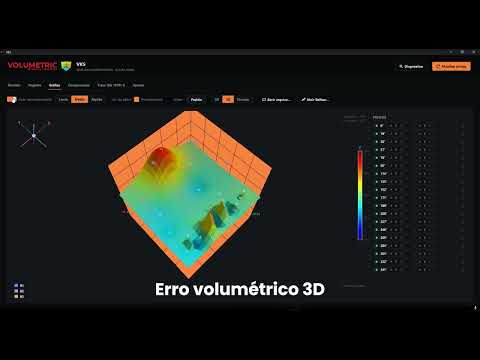
- Reconstructs the measured volumetric error in a 2D, 3D, or polar plot, depending on the test
- Calculates the pivot offset (RTCP) for correction, already in your control's syntax
What you get isn't just "RTCP is off." It's the full volumetric error diagnosis and the exact correction value, ready to apply.
Errors this diagnostic reveals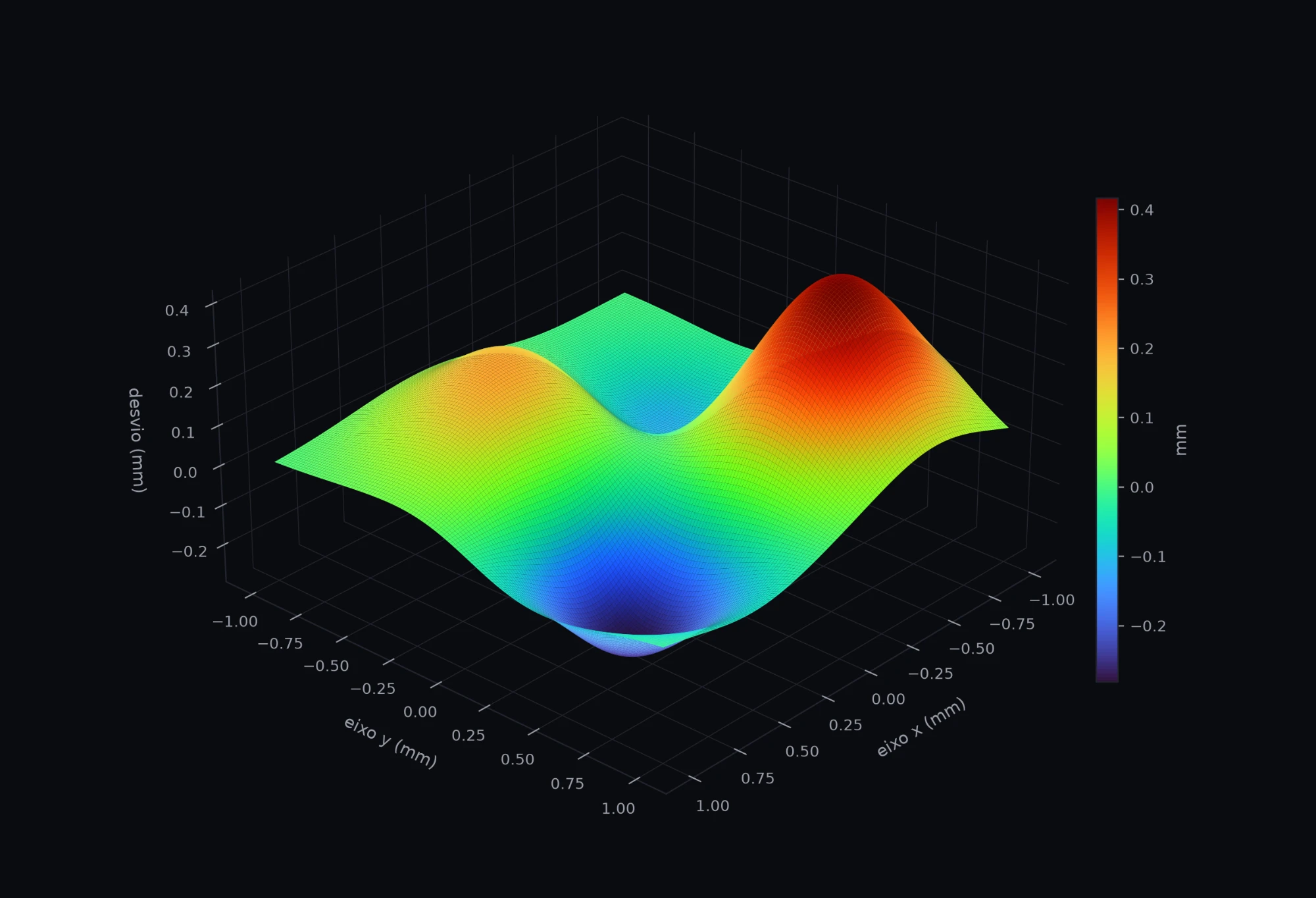
What RTCP is and why it depends on kinematics +
RTCP (Rotation around Tool Center Point, also called TCPM depending on the control) is the function that keeps the tool tip at the programmed position while the machine's rotary axes turn. For this to work, the control needs to know the machine's real kinematic parameters with precision: the center of rotation of each rotary axis, the squareness between those axes and the linear axes, and the mechanical offsets between head, table, and spindle.
When the parameters stored in the control no longer match the machine's real geometry, RTCP compensates incorrectly.
Why this error only shows up in simultaneous 5-axis machining +
With RTCP off, the program is correct and the control believes it's positioning the tool in the right place, but it drifts from the programmed position. The size of that deviation grows in proportion to the distance between the tool tip and the rotation center of the axes: the more the machine tilts the tool during simultaneous cutting, the larger the error on the part.
In 3-axis work, or in simple 5-axis indexed positioning, this same kinematic error can go unnoticed, because the lever-arm effect isn't in play.
How VKS measures: dial comparators and ISO 10791-6 tracking +
The diagnostic is run with a measurement device developed in-house by Volumetric: up to three digital dial comparators, read simultaneously via USB-serial. VKS auto-detects the connected ports, and each comparator has its own reading line, so a locked or disconnected port doesn't affect the others.
Data is logged (continuous or manual capture, with automatic start/stop by motion threshold) and viewed in three modes: 2D (curves over time), 3D (a volumetric error surface map, colored by tolerance), and polar (for circular trajectory tests). The tracking module runs the standardized BK1-BK4 test programs from ISO 10791-6 for 5-axis machining centers, with ready G-code for Fanuc and Siemens.
When it's worth running this diagnostic +
It's typically recommended:
- At technical acceptance of a new 5-axis machine
- Before running critical simultaneous-machining programs
- After a collision, head replacement, or retrofit
- When contoured parts machined with a tilted tool come out with inconsistent geometry from one region to another
- As part of periodic preventive maintenance
Kinematic error doesn't show up in every operation: it stays hidden until the day a program actually requires real tool tilt.